A thoughtful bathroom wall tiles design can completely change the atmosphere of a bathroom. While color still matters, texture has become one of the biggest design elements in modern remodels. Natural-looking wall tiles add depth, soften the room, and create a sense of calm that works especially well in Sarasota and Manatee homes, where abundant daylight brings every surface to life. The best designs do not feel busy. Instead, they create quiet visual interest that continues to look beautiful year after year.
Why textured bathroom wall tiles are becoming the centerpiece of modern bathrooms
Bathrooms are no longer treated as just functional utility rooms. Since they frame how you start and end every day, more homeowners are designing them as quiet, comfortable spaces where you can actually unwind.
That shift has made textured bathroom wall tiles more popular than ever. Instead of relying on bold patterns or dramatic colors, texture introduces movement in a quieter way. As natural light moves across the surface throughout the day, subtle ridges and organic finishes create changing shadows that make the room feel layered without becoming overwhelming.
Many homeowners are also moving away from glossy finishes in favor of softer surfaces that resemble natural stone, handcrafted ceramics, or weathered materials found along the coast.
Bathroom wall tiles design ideas inspired by nature
Nature remains one of the strongest influences in bathroom design because its colors and textures rarely feel dated.
Stone-inspired porcelain: Large-format porcelain that mimics limestone or slate remains one of the most reliable choices for a coastal bathroom. You get all the organic movement of natural stone with a non-porous surface that resists water, soap scum, and daily wear without needing to be sealed.
Travertine look-alikes: Soft travertine patterns are finding a huge home in Florida design right now. The subtle veining and warm beige or cream undertones pair effortlessly with natural oak vanities, brushed brass hardware, or matte black fixtures.
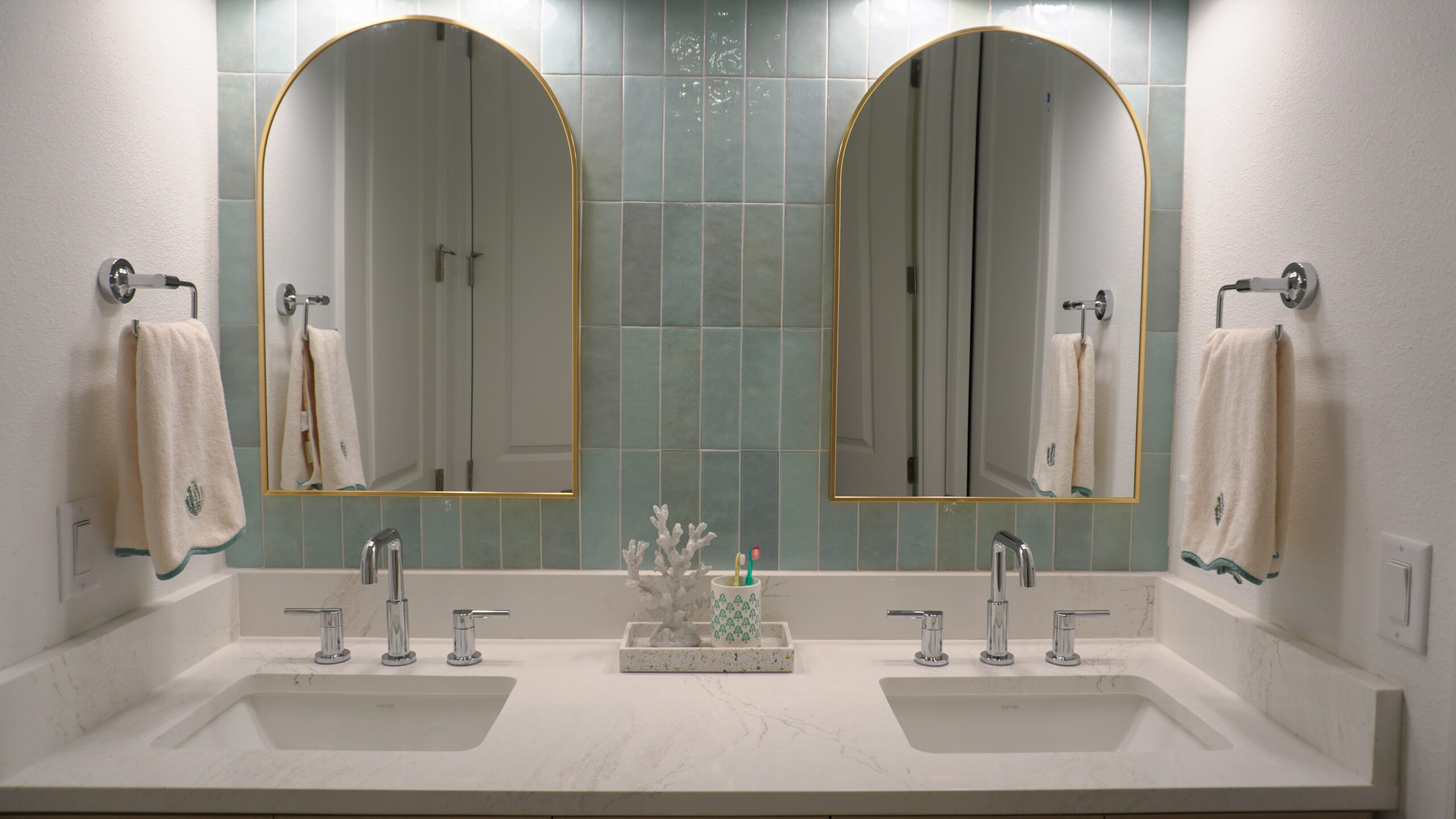
Handcrafted ceramic tiles: If you want a wall with real personality, artisanal or Zellige-style ceramic tiles bring subtle variations in shade and surface depth. Because no two tiles are carbon copies of each other, the finished wall catches the light differently throughout the day, giving the space an authentic, handcrafted feel.
Textured wood-look porcelain: Getting the warmth of natural timber inside a wet area used to be impossible. Modern wood-grain porcelain lets you run rich, tactile textures right through the shower or along a vanity accent wall without worrying about moisture damage or warping.
Textured bathroom walls that still feel timeless
A common concern for homeowners is whether a textured wall will end up feeling like a short-lived trend. In practice, longevity comes down to balance and restraint:
- Stick to soft, natural tones: Neutral backdrops like warm alabaster, soft greige, sand, and pale taupe let the physical texture do the heavy lifting. When you rely on subtle depth rather than loud, busy patterns, the room stays timeless.
- Balance rough with smooth: You do not need texture on all four walls. Letting a textured tile take center stage inside the shower or behind the vanity while keeping the surrounding walls clean and simple creates a clear focal point. The contrast gives the room energy without overwhelming the eye.
- Choose soft gradients over deep grooves: Tiles with gentle, organic rippling age far better than sharp, aggressive geometric patterns, and as a practical bonus, they are much easier to wipe clean.
Bathroom wall texture ideas for every bathroom size
Texture works surprisingly well in bathrooms of all sizes when it is applied thoughtfully.
In a smaller bathroom, vertically textured tiles can naturally draw the eye upward, making ceilings feel taller. Large format tiles also reduce grout lines, helping the room appear more open.
Guest bathrooms provide an opportunity to introduce a little more personality. A textured wall behind the vanity or mirror can create an elegant focal point without requiring a full renovation.
In larger primary bathrooms, texture can be used throughout the shower, around a freestanding tub, or behind double vanities to create separate visual zones while keeping the overall palette cohesive.
Pairing textured wall tiles with countertops
Wall tiles rarely exist on their own. They need to work together with countertops, cabinetry, lighting, and plumbing fixtures.
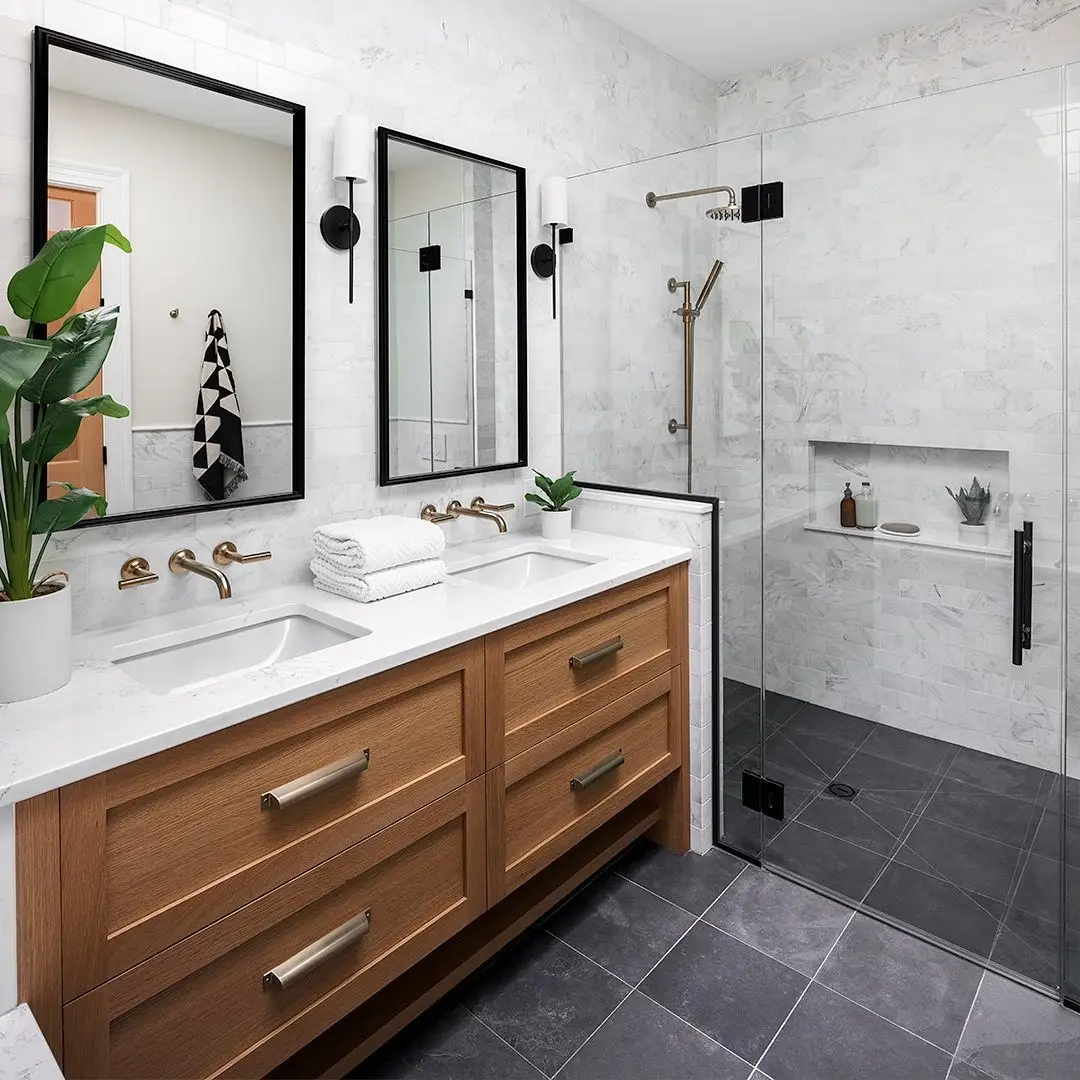
Natural-looking textured tiles pair especially well with quartz countertops because the smooth countertop surface balances the movement of the wall tile. Wood cabinetry adds warmth, while floating vanities create a lighter appearance that allows textured walls to stand out.
If you are planning to update both surfaces, Kirkplan’s guide to bathroom countertop remodeling explains how countertop materials and wall finishes can complement one another without competing for attention.
Texture belongs in more than the shower
Many homeowners automatically think of shower walls when choosing tile, but texture can enhance several areas throughout the bathroom.
A vanity wall finished with softly textured tile creates an elegant backdrop for mirrors and lighting. Recessed shower niches become more noticeable when lined with a complementary textured tile. Bathtub surrounds gain additional warmth through subtle stone-inspired finishes, while accent walls can introduce visual interest without requiring every wall to be covered.
Using texture selectively often creates a stronger result than covering every surface with the same material.
Planning your bathroom remodel from the beginning
Tile selection is most successful when it happens early in the design process rather than after major construction decisions have already been made.
Wall tile influences lighting placement, shower niches, waterproofing details, grout lines, countertop selection, and even the way a room feels proportionally. Planning these elements together produces a more cohesive finished bathroom and helps avoid unnecessary adjustments later in the project.
Homeowners planning a complete renovation can explore Kirkplan’s bathroom remodeling services, where tile, cabinetry, countertops, and layout are designed as one coordinated space rather than separate decisions.
Remodeling in Sarasota? Do not overlook permitting
Pulling the proper permits is a standard part of any major bathroom remodel, especially when moving plumbing lines, adding electrical circuits, or knocking down walls. Taking care of local building permits early on keeps your project on schedule and protects your home’s resale value down the road. Homeowners who want to learn more can read Kirkplan’s permit guide for Sarasota and Manatee bathroom remodeling, which explains what typically requires approval and how the permitting process works locally.
Why natural textures make a bathroom feel more relaxing
There is real research behind the growing popularity of natural materials in interior design.
Research in environmental psychology consistently shows that bringing natural materials into your home does more than just look good. Organic textures and natural elements actively lower stress, helping a space feel calmer, warmer, and genuinely more comfortable to be in.
That is one reason so many modern bathroom designs rely on texture rather than bold decoration. The effect feels subtle, but homeowners often notice how much more relaxing the room becomes.
Why Sarasota and Manatee homeowners choose Kirkplan Kitchen & Bath
Designing a bathroom involves much more than selecting attractive tile.
For more than 25 years, Kirkplan Kitchen & Bath has helped homeowners throughout Sarasota and Manatee County create bathrooms that balance beauty with long-term performance. From custom tile installation and countertop replacement to complete bathroom remodeling, the team manages every stage of the project, including design, permitting, and installation.
Because every home is different, the goal is never to recommend the same materials for everyone. Instead, each bathroom is designed around the homeowner’s lifestyle, the character of the home, and the finishes that will continue to look beautiful for years to come.