
Wood is not indestructible, and it is not maintenance-free.
In Florida, natural wood can also respond to changes in humidity. That is one reason material selection needs to take the location into account. For example, Kirkplan recommends MDF doors for certain high-humidity locations such as garages because natural wood can expand with Florida humidity.
So this is not a case of “wood good, thermofoil bad.”
It is about understanding how each material behaves and choosing accordingly.
What cabinet materials does Kirkplan recommend for a busy kitchen?
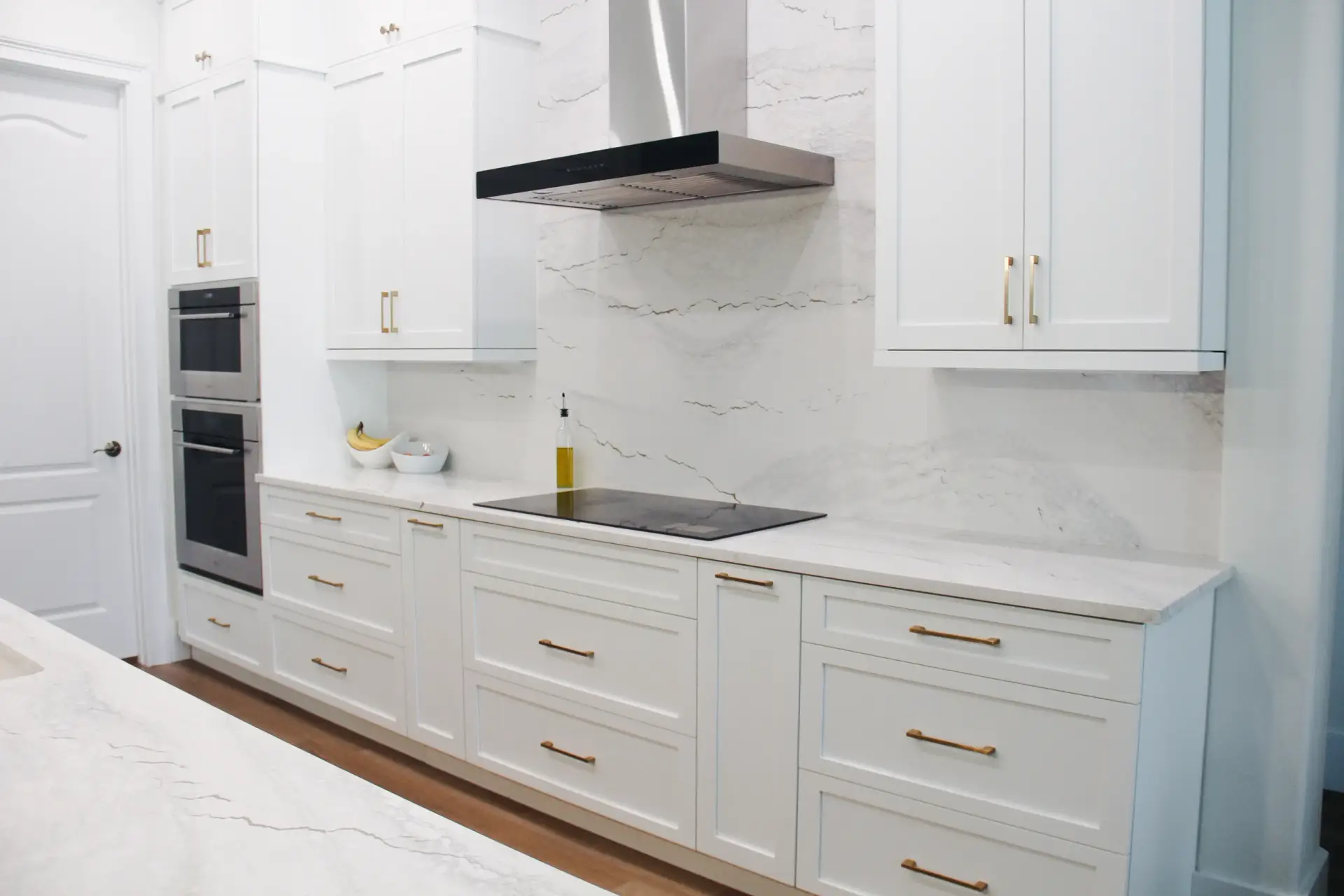
Kirkplan takes an application-focused approach to cabinetry.
Instead of treating every material as interchangeable, the team considers the environment, the design and how the kitchen will actually be used.
For homeowners looking for alternatives to thermofoil, Kirkplan offers several cabinet options.
Custom wood cabinets
Kirkplan’s primary custom cabinet offering is built around Conestoga cabinetry, with custom doors available in different styles, colors and wood species.
Options include woods such as:
- White oak
- Birch
- Pine
- Maple
- Cherry
- Walnut
The doors are made by Conestoga, while Kirkplan builds the cabinet boxes in its own workshop.
For homeowners who want natural wood, customization and the ability to create a kitchen around a particular design, this offers considerably more flexibility than a fixed cabinet program.
Acrylic cabinet doors
For a contemporary kitchen, acrylic doors can provide the sleek, smooth appearance some homeowners want without choosing thermofoil.
Kirkplan also offers modern slab-door options, including high-gloss finishes for contemporary projects.
The important thing is that homeowners do not have to choose between traditional wood and thermofoil. There are other ways to create a clean, modern cabinet aesthetic.
What about cabinet refacing?
Replacing every cabinet is not always necessary.
If you like your existing kitchen layout and your cabinet boxes are still in good condition, cabinet refacing may be an alternative.
Refacing can update the appearance of the kitchen by replacing doors and drawer fronts and updating the visible surfaces.
Learn more about Kirkplan’s kitchen cabinet refacing
It is an option worth considering before deciding that a complete cabinet replacement is the only way to get a new look.
What should you look for in a cabinet besides the door?
The door gets most of the attention.
It is the part you choose from a wall of samples, after all.
But the cabinet box and hardware matter just as much to the finished product.
Kirkplan’s cabinetry construction includes:
- Maple plywood boxes
- Three-quarter-inch drawers
- Dovetail construction
- Blum hinges
- Soft-close hardware
These are not flashy features. They are construction details that affect how the cabinetry feels and functions every day.
Kirkplan also provides a 5-year warranty on its cabinetry.
That makes the construction underneath the finish worth paying attention to.
When might thermofoil still make sense?
There are kitchens where thermofoil can be a reasonable choice.
If a homeowner prioritizes lower cost, easy cleaning and a smooth, consistent finish, thermofoil may make sense, provided it is properly positioned away from significant heat exposure and installed and maintained according to the manufacturer’s requirements.
The important thing is not to treat thermofoil as universally unsuitable.
Not every thermofoil cabinet will peel.
The question is whether the material’s limitations fit your kitchen.
If the cabinetry is positioned safely away from significant heat and the homeowner understands how to care for it, the material may perform well.
But if long-term durability is the priority, particularly in a kitchen with cabinetry immediately next to a high-heat appliance, Kirkplan does not recommend taking that risk.
How should you choose cabinet materials for your kitchen?
Before choosing a cabinet based on its appearance or price, look at the kitchen itself.
Ask:
Where are the ovens and other heat-producing appliances?
Will cabinet doors or drawer fronts sit directly beside an oven?
How much humidity will the cabinets encounter?
Does the kitchen get strong direct sunlight?
How heavily will the cabinets be used?
Do you want the option to refinish the doors later?
Is easy cleaning more important to you than repairability?
Are you keeping your existing layout or changing the entire kitchen?
What does the manufacturer’s care and warranty information say?
These questions may not be as exciting as picking a cabinet color.
They are also the questions you will be glad you asked several years from now.
Why does Kirkplan take a different approach to cabinet selection?
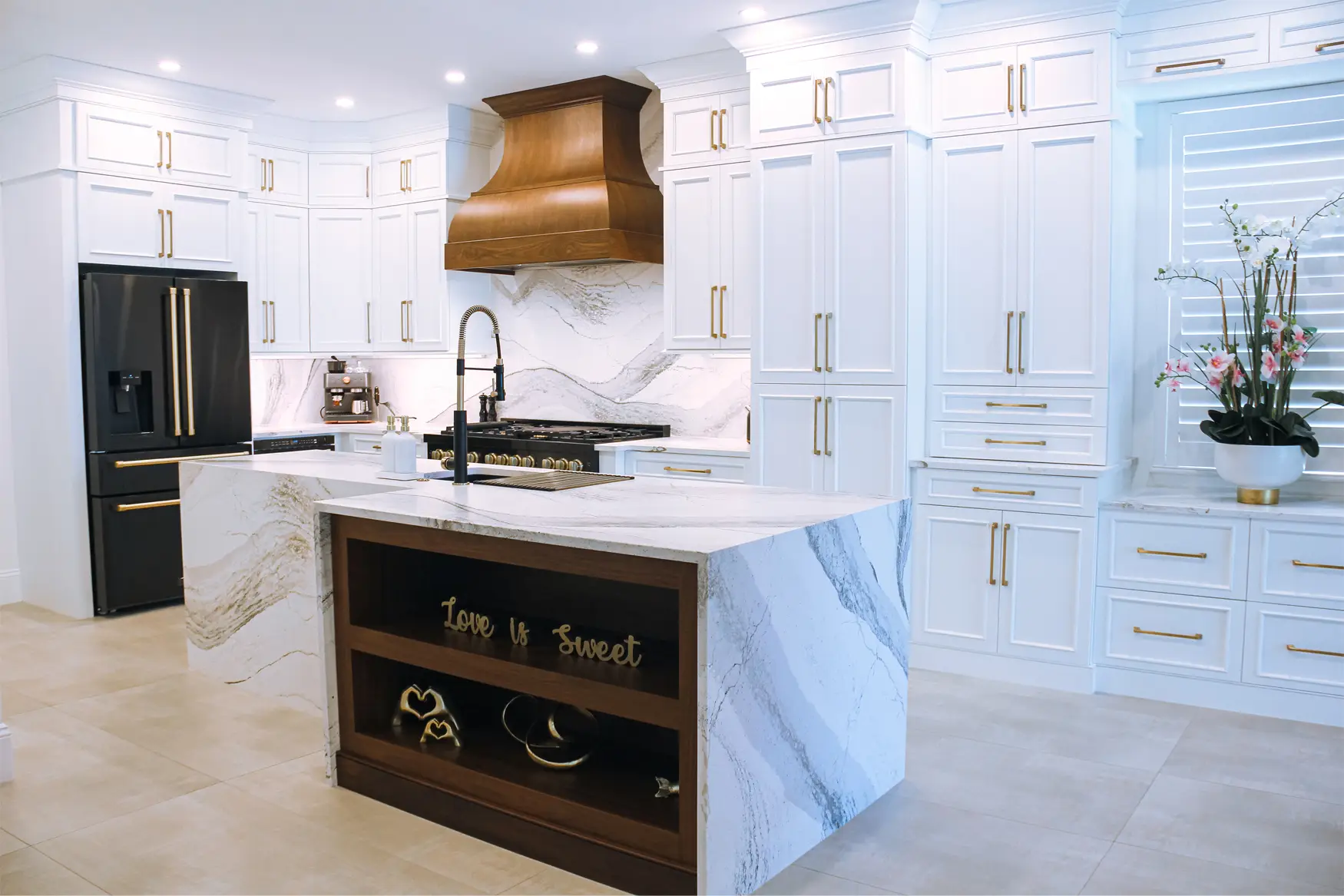 Kirkplan is a premium interior remodeling company, and part of that approach is helping homeowners understand what they are actually buying.
That includes talking through the strengths and limitations of different materials rather than treating every cabinet finish as equally appropriate for every situation.
Our cabinetry offering includes custom and semi-custom options, with cabinet boxes fabricated in Kirkplan’s own workshop and construction details such as plywood boxes, dovetail drawers and Blum hardware.
The goal is not to sell the most expensive cabinet.
It is to choose a cabinet that makes sense for the kitchen and to avoid materials that may create problems later.
That is particularly important with thermofoil.
A smooth, attractive finish does not tell you how it will behave next to a self-cleaning oven five years from now.
Frequently asked questions about thermofoil cabinets
What is thermofoil?
Thermofoil is a PVC or vinyl film formed over an MDF cabinet door. It creates a smooth, consistent surface and is often chosen because it is easy to clean and can be more affordable than some wood or painted cabinet options.
Are thermofoil cabinets good?
They can be. Thermofoil offers a smooth, easy-to-clean finish at a potentially lower cost. Its main limitation is vulnerability to concentrated heat, which is why Kirkplan does not recommend it for applications where heat exposure is a concern.
Why do thermofoil cabinets peel?
Excessive or repeated heat can weaken the bond between the thermofoil film and the MDF underneath, causing the surface to bubble, lift or separate.
Are thermofoil cabinets worth buying?
They can be, depending on the application. They are more appropriate when cost, easy cleaning and a smooth finish are priorities and the cabinets can be kept away from significant heat exposure.
Can thermofoil cabinets go next to an oven?
This requires caution. Because thermofoil is vulnerable to concentrated heat, Kirkplan does not recommend it where cabinet doors or drawer fronts are likely to receive significant heat from an oven.
Can a self-cleaning oven damage thermofoil cabinets?
Yes. The extremely high temperatures generated during a self-cleaning cycle can damage nearby thermofoil cabinetry. Homeowners should follow the cabinet and oven manufacturers’ instructions, including any recommendations for heat shields or opening or removing nearby doors and drawers.
Can peeling thermofoil cabinets be repaired?
Once the thermofoil has substantially separated from the MDF substrate, a simple touch-up generally is not enough. Replacing the affected door or drawer front is usually the practical solution.
Is thermofoil better than wood?
Neither is automatically better. Thermofoil offers a consistent, easy-to-clean finish, while wood offers natural variation, greater refinishing flexibility and generally better tolerance of concentrated heat. The right choice depends on the kitchen and how the cabinets will be used.
What cabinet material lasts the longest?
There is no single material that can be guaranteed to last the longest in every situation. Construction quality, installation, environmental conditions, maintenance and exposure to heat and moisture all affect cabinet longevity.
Can I reface thermofoil cabinets?
Potentially, depending on the condition and construction of the existing cabinets. If the cabinet boxes are suitable, refacing can provide a new appearance without replacing the entire kitchen.
The bottom line: should you choose thermofoil?
Thermofoil has real advantages. It is smooth, consistent, easy to clean and can be less expensive than some alternatives.
But heat sensitivity and limited repairability are significant drawbacks.
For Kirkplan, that is enough to recommend against thermofoil when long-term kitchen durability is the priority, especially when cabinetry will be exposed to concentrated heat from an oven.
The self-cleaning oven drawer problem is a perfect example of why material selection deserves more thought than simply choosing the finish you like best.
The right cabinet material should fit your appliance layout, cooking habits, Florida environment, design preferences and expectations for the future.
Sometimes that may mean thermofoil.
For Kirkplan, more often, it means choosing a cabinet material with better long-term flexibility and performance for the way the kitchen will actually be used.
Explore Kirkplan’s cabinet selection or learn more about Kirkplan kitchen remodeling.