
When comparing quartz and marble for a bathroom vanity, quartz usually wins on practical points. It is nonporous, low-maintenance, and stands up to everyday bathroom messes without staining. Marble, on the other hand, brings natural depth, unique veining, and the authentic feel of real stone. The best pick comes down to your daily routine, how much maintenance you are willing to handle, and the look you fall in love with.
What is the real difference between quartz and marble?
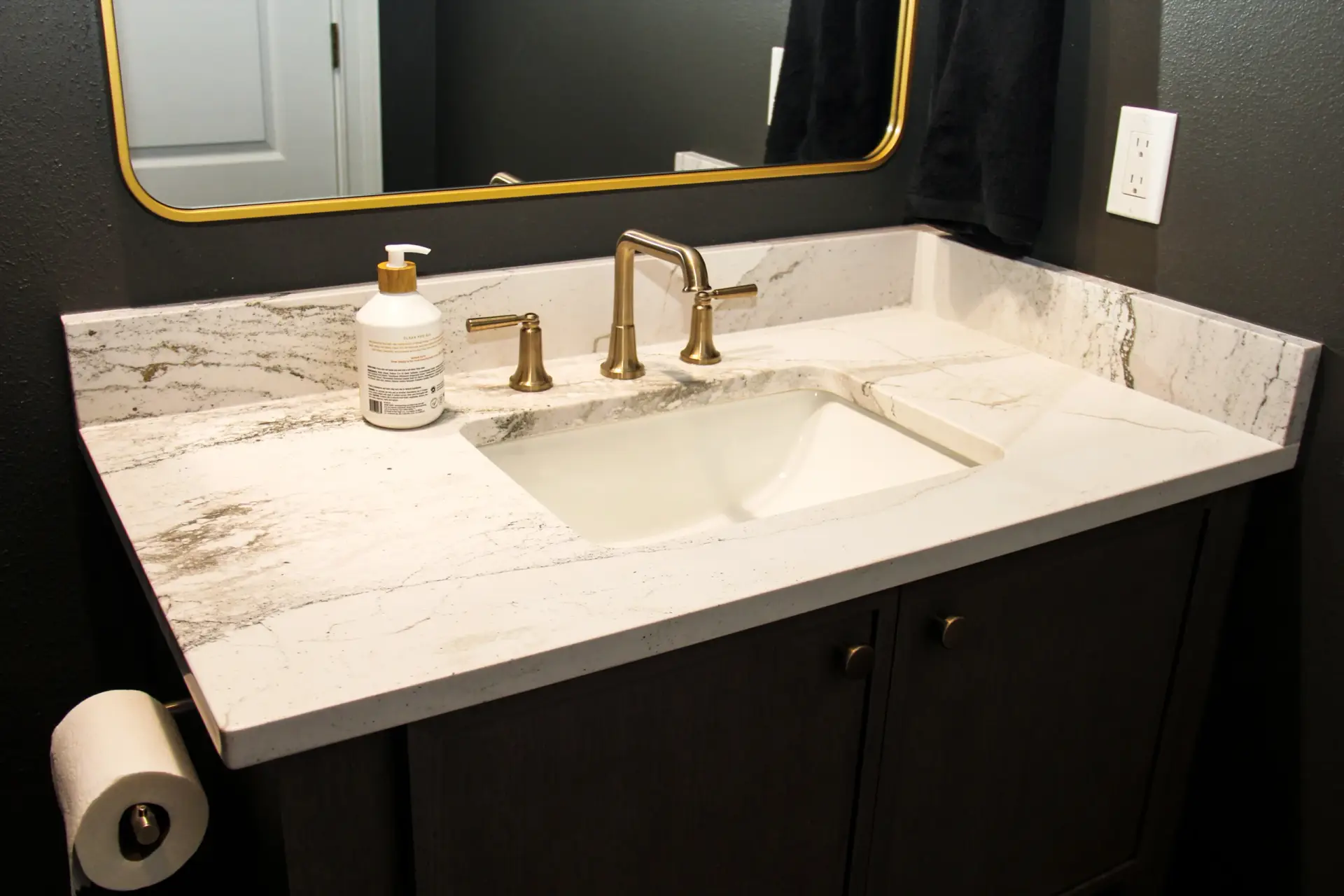 On the surface, quartz and marble can look almost identical, especially now that modern quartz mimics natural veining so well. Underneath, though, they are completely different surfaces.
Quartz is an engineered material made from natural quartz minerals bound together with resin and pigments. Because it is manufactured, the pattern and color are consistent throughout the slab. That makes it much easier to match your counters precisely to your cabinetry and tile choices. Plus, since quartz is nonporous, toothpaste, makeup, and water spots will not sink into the surface. You never have to seal it, and everyday cleanup takes seconds.
You can explore the countertop options available through Kirkplan Kitchen & Bath when comparing surfaces for a bathroom remodel.
Marble is a natural stone formed through geological processes over very long periods of time. Its appeal is easy to understand once you see a good slab in person. The veining is naturally occurring, the color can vary from one slab to another, and no two pieces have exactly the same pattern.
That individuality is a big part of the reason people choose marble. It also comes with a tradeoff. Marble is porous and can be affected by staining and etching, so it generally needs more care than quartz.
Is quartz or marble better for a bathroom vanity?
There is no universal winner, but quartz tends to be the easier material to live with.
A bathroom vanity deals with a surprising amount of daily abuse. Water sits around the sink. Toothpaste gets wiped away. Makeup and skincare products find their way onto the counter. Someone eventually forgets to wipe up a splash.
Quartz handles this kind of routine well. Its nonporous surface makes it less vulnerable to staining from everyday bathroom use, and there is no regular sealing routine to remember.
Marble can certainly work in a bathroom, but it asks a little more from the homeowner. Because natural marble is porous, sealing is important, and acidic substances can cause etching. That means products that seem harmless in a bathroom may leave a dull spot if they sit on the surface.
For a bathroom that needs to look good without requiring much thought, quartz has a pretty compelling advantage.
Durability and everyday use
Quartz is durable and designed for everyday use, but it is worth avoiding the common claim that quartz is completely scratchproof or indestructible. No countertop material is.
Marble is also a durable natural stone, but it is softer and more susceptible to scratching and etching. In a bathroom, this may not be a major concern for everyone. A guest bathroom that sees occasional use is a very different situation from a busy primary bathroom used by a family every morning.
That is why the way you live matters just as much as the material specifications.
Staining and moisture
This is one of the clearest differences between quartz and marble.
Quartz is nonporous, so moisture and many common stains remain on the surface rather than soaking into the material.
Marble is porous, which makes proper sealing important. Even with a good sealer, spills should not be left sitting on the surface for long periods.
For homeowners who would rather wipe down the vanity and move on with their day, quartz is usually the less demanding option.
Maintenance
Quartz is straightforward. Regular cleaning with products recommended for the specific surface is generally all that is needed.
Marble requires a little more awareness. It should be cleaned with products suitable for natural stone, and homeowners need to be mindful of acidic cleaners and personal care products that could etch the surface.
Neither material is difficult to care for when treated properly. The difference is that marble requires more attention to what comes into contact with it.
Heat and chemical exposure
Heat is usually less of a concern in a bathroom than in a kitchen, but it is still worth knowing how your countertop should be treated.
Quartz can be damaged by excessive heat, so placing very hot objects directly on the surface should be avoided. Marble does not have the same type of heat sensitivity, but it remains vulnerable to acids and certain chemicals.
The safest approach for either material is simple: follow the care instructions provided for the specific product rather than assuming that a general countertop rule applies to every surface.
Is marble good for bathroom countertops?
Yes. Marble can be an excellent bathroom countertop, particularly when the natural character of the stone is an important part of the design.
There is something about real marble that is difficult to reproduce perfectly. The veining moves naturally across the slab, and small variations give the surface a sense of depth. In an elegant primary bathroom, that can become one of the room’s defining features.
The important thing is to go into the decision knowing what you are choosing. Marble is not a maintenance-free material, and it does not need to be treated like one.
If you love the look enough to accept the occasional mark or the additional care, marble can age beautifully.
Why quartz is often the practical choice for Sarasota bathrooms
For homeowners in Sarasota and Manatee County, bathroom design is often about finding the balance between a beautiful space and one that is easy to live with.
A primary bathroom may be used every day by several people. A guest bathroom may sit untouched for weeks and then suddenly be busy when family visits. Some Florida homes are seasonal, while others are occupied year-round. Those differences matter when selecting materials.
Quartz can be particularly appealing when low maintenance is a priority. Its nonporous surface is convenient around sinks and vanities, where moisture and everyday personal care products are unavoidable.
That does not make marble a poor choice for a Sarasota bathroom. It simply means quartz tends to fit more easily into a “clean it and forget it” routine.
Quartz vs. marble bathroom countertops: Which is easier to maintain?
Here is the simplest way to look at the everyday differences:
The exact performance and care requirements can vary by product, so always follow the manufacturer’s recommendations for the surface you choose.
What looks better: marble or quartz for a bathroom vanity?
This is where the decision gets more personal.
If you want a bathroom with a calm, consistent appearance, quartz gives you plenty of options. Some designs are subtle and understated, while others feature dramatic veining inspired by natural marble. You can find everything from soft neutral surfaces to darker, more distinctive patterns.
Marble has a different kind of appeal. Its beauty comes from the fact that the pattern is not perfectly controlled. The veining can change direction, become more pronounced in one area, or vary from one slab to another.
So instead of asking which one looks better, ask which type of beauty suits your home.
Quartz is a good fit when predictability and easy maintenance matter. Marble makes sense when natural variation and character are worth the extra care.
How should you match a bathroom countertop with tile and cabinetry?
The countertop should not be selected in isolation.
One of the easiest mistakes in a bathroom remodel is choosing three beautiful materials that do not work well together. A heavily veined countertop, strongly patterned tile, and highly detailed vanity can each look fantastic individually while making the finished bathroom feel unnecessarily busy.
A better approach is to decide which element should have the most visual attention.
If your countertop has pronounced movement, consider a quieter wall tile. If the countertop is relatively simple, you have more freedom to introduce texture through the walls.
The same applies to cabinetry. Warm wood cabinetry can work beautifully with a countertop that has cream, beige, or warm gray undertones, while cooler cabinet colors may pair better with a surface carrying cooler gray or blue undertones.
Tile is another opportunity to bring personality into the room. Kirkplan’s bathroom tile services can be part of that larger design conversation, particularly when the countertop, vanity, shower walls, and flooring all need to feel connected.
And do not forget lighting. A countertop that looks soft and warm under showroom lighting can read very differently beside a cool LED fixture at home.
What is the best countertop material for a bathroom?
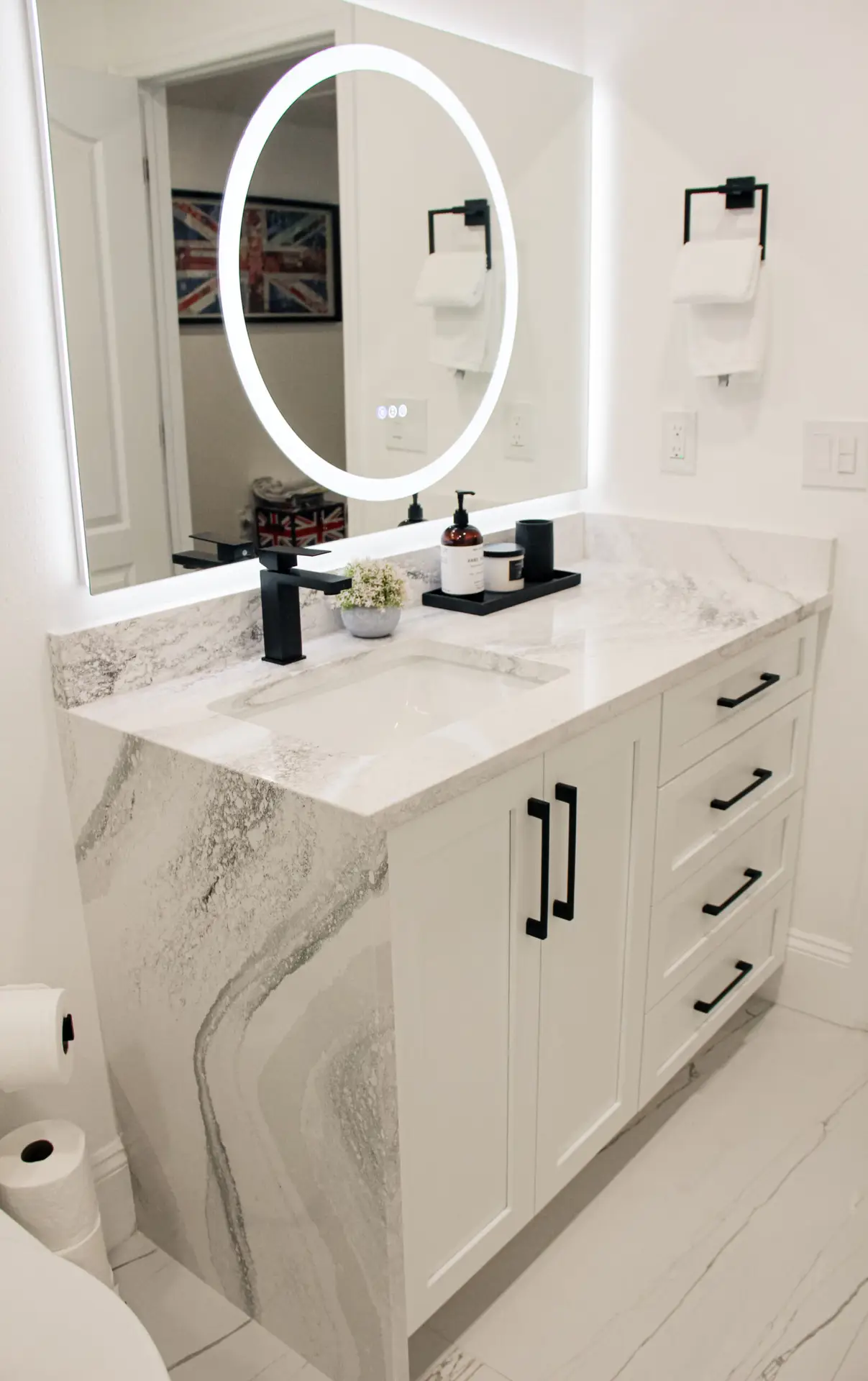 For many homeowners, quartz is the best countertop material for a bathroom when low maintenance and everyday durability are the priorities.
That does not mean marble is second-rate. It means the two materials solve slightly different problems.
Choose quartz when you want a surface that is easy to maintain, does not require routine sealing, and offers plenty of control over color and pattern.
Choose marble when the natural appearance of stone is central to your design and you are comfortable giving the surface more attention.
The best choice is the one that fits both your bathroom and your habits.
How much does the countertop matter in a bathroom remodel?
More than many homeowners expect.
A vanity countertop occupies a fairly large visual area, so changing it can alter the entire feel of the room. But it works best when it is considered alongside the vanity, tile, mirrors, lighting, plumbing fixtures, and storage.
For example, replacing an old countertop while keeping dated cabinetry may improve the room, but it may not deliver the transformation you were hoping for. On the other hand, a well-planned vanity with complementary cabinetry, countertop, tile, and lighting can make a bathroom feel completely different without relying on unnecessary decoration.
That is one reason it helps to approach the countertop as part of the overall design. Kirkplan’s bathroom remodeling services can bring those decisions together when a countertop replacement is part of a larger renovation.
What should Sarasota and Manatee homeowners consider before replacing a bathroom countertop?
Start with the existing space.
Measure the vanity carefully and consider the sink configuration, backsplash, wall dimensions, overhang, and plumbing underneath. These details can affect the final countertop and installation.
Then look at the room as a whole. Bring cabinet, tile, flooring, and countertop samples together rather than choosing each one separately. Natural and artificial light can change how colors appear, so it is worth looking at samples at different times of day if possible.
Finally, be honest about maintenance. If you know that you do not want to think about resealing a surface or worrying about what products sit on it, that should influence your choice.
If the project involves more extensive bathroom remodeling work, it is also worth understanding local permitting requirements before construction begins. Kirkplan’s Sarasota and Manatee bathroom remodeling permit guide is a useful place to start.