
Mixing cabinet finishes is one of the easiest ways to make a kitchen feel custom and layered. The challenge is doing it in a way that feels intentional instead of chaotic. With the right balance of painted cabinets, wood cabinet finishes, and subtle glaze details, you can create depth and personality while still keeping the design calm and cohesive.
What are kitchen cabinet finishes?
Simply put, a cabinet finish is the coating that gives your cabinets their color, texture, and protection. It’s what you see and touch every day, and it does more work than most people realize. Painted finishes, stained wood, glazed details, clear protective coats, each one behaves differently in a kitchen environment and contributes something different to the overall feel of the space.
Why mixing cabinet finishes works in modern kitchens
For a long time, kitchens followed a pretty simple formula: pick one cabinet color and repeat it everywhere. That approach is fading fast, and for good reason.
When you mix finishes thoughtfully, the kitchen stops feeling like one continuous block of cabinetry and starts feeling like a designed space. Different finishes can define the island from the perimeter, separate a pantry wall, or simply add the kind of visual layering that makes a room interesting to be in. In larger or open-concept kitchens especially, that distinction makes a real difference.
Understanding the main types of cabinet finishes
Before you start mixing, it helps to know what you’re working with.
Painted cabinet finishes
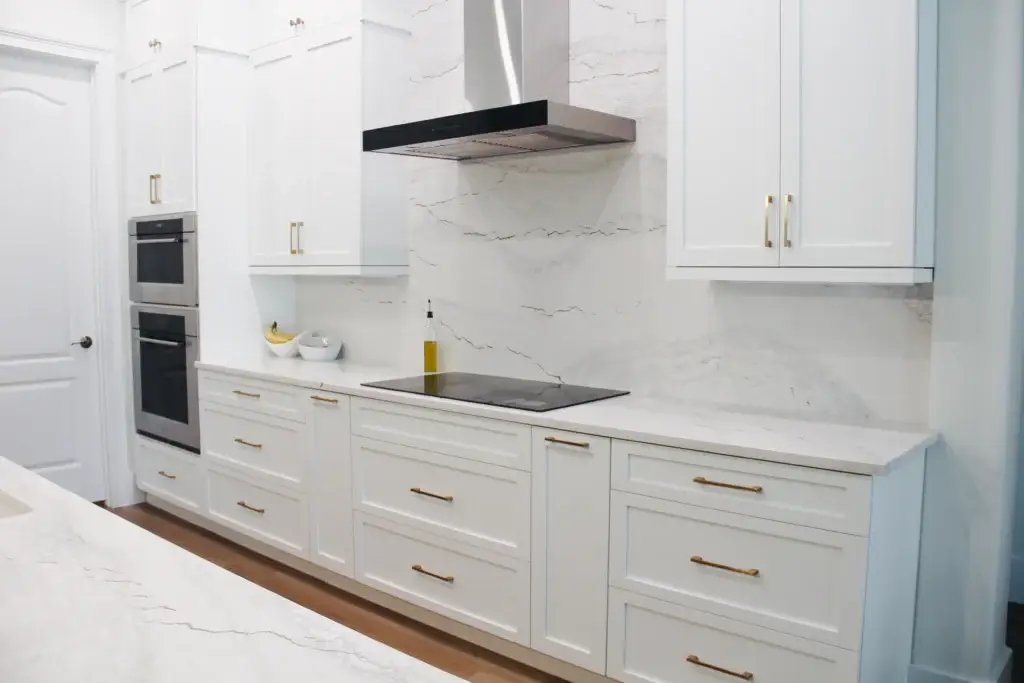
Painted cabinets give you a clean, smooth surface that works in almost any kitchen style. Soft whites, light grays, navy, muted greens, these are popular for a reason. They bring color into the space without demanding attention, and they reflect light well, which makes kitchens feel bigger and brighter than they actually are.
Wood cabinet finishes
Where painted finishes cover, wood finishes reveal. A good stain works with the natural grain rather than hiding it, bringing warmth and texture that painted surfaces simply can’t replicate.
Common choices include:
- White oak for light, coastal kitchens
- Walnut for deeper contrast and warmth
- Maple for subtle grain and versatility
Wood cabinets are often used on islands or lower cabinetry to visually ground the design.
Glazed cabinet finishes
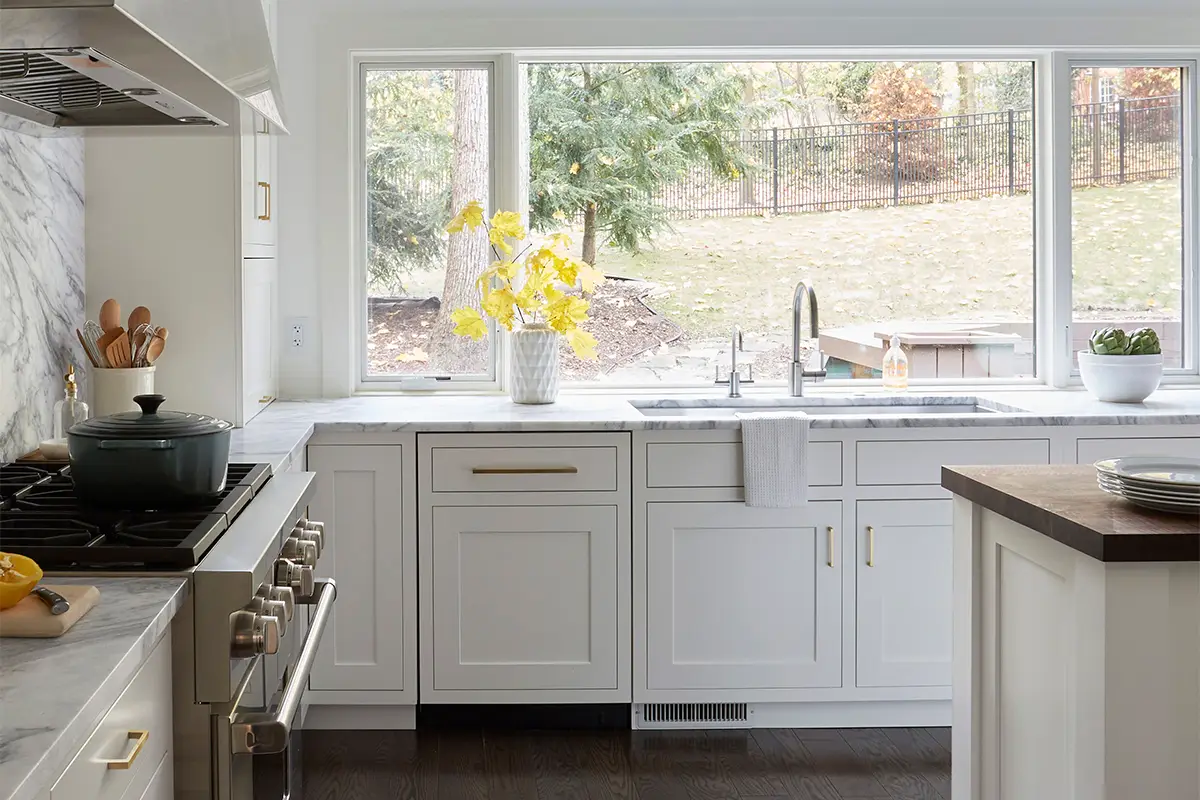
A cabinet finishes glaze is a decorative layer applied over paint or stain to highlight the contours of cabinet doors.
Glazing is more common in traditional or transitional kitchens because it adds subtle depth and dimension around panel edges and moldings.
It’s a small detail that can make cabinetry feel more detailed and refined.
Start with one dominant finish
One of the simplest design principles is the 60/40 rule.
Let one cabinet finish cover roughly 60% of the kitchen, while the secondary finish takes the remaining 40%.
For example:
- Painted cabinets around the perimeter
- Wood cabinetry on the island
This balance keeps the kitchen feeling intentional rather than patchwork.
Pair wood cabinet finishes with painted cabinets
One of the most popular combinations today mixes painted cabinets with natural wood finishes.
Wood introduces warmth that painted cabinetry sometimes lacks. When paired thoughtfully, the result feels balanced and welcoming.
A few simple guidelines help this pairing work:
- Keep undertones consistent (warm with warm, cool with cool)
- Use wood on one main focal point, such as the island
- Avoid introducing multiple stain tones
For example, white oak islands paired with soft gray cabinets have become especially popular in coastal Florida homes.
Use the island as the accent finish
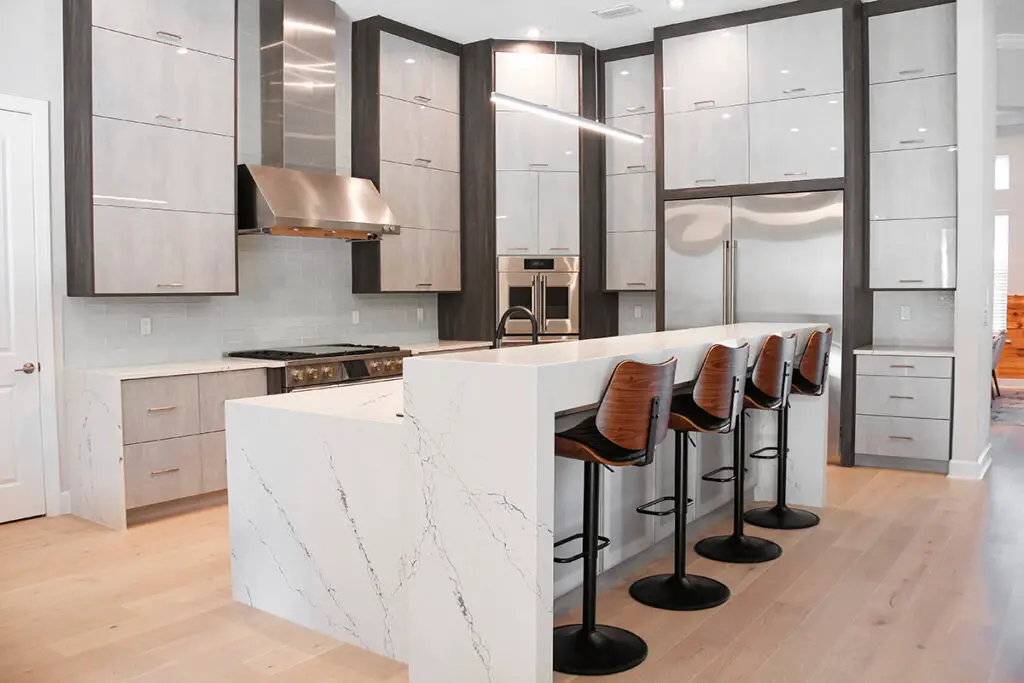
If you’re unsure where to introduce a second cabinet finish, start with the island.
The island naturally becomes the visual center of the kitchen, making it the perfect place for contrast.
Common combinations include:
- Navy island + light perimeter cabinets
- Walnut island + painted cabinetry
- Charcoal island + warm wood accents
Repeating that accent color in small ways — through bar stools, shelving, or decor — helps the kitchen feel balanced rather than random.
Balance cabinet finishes with countertops and backsplash
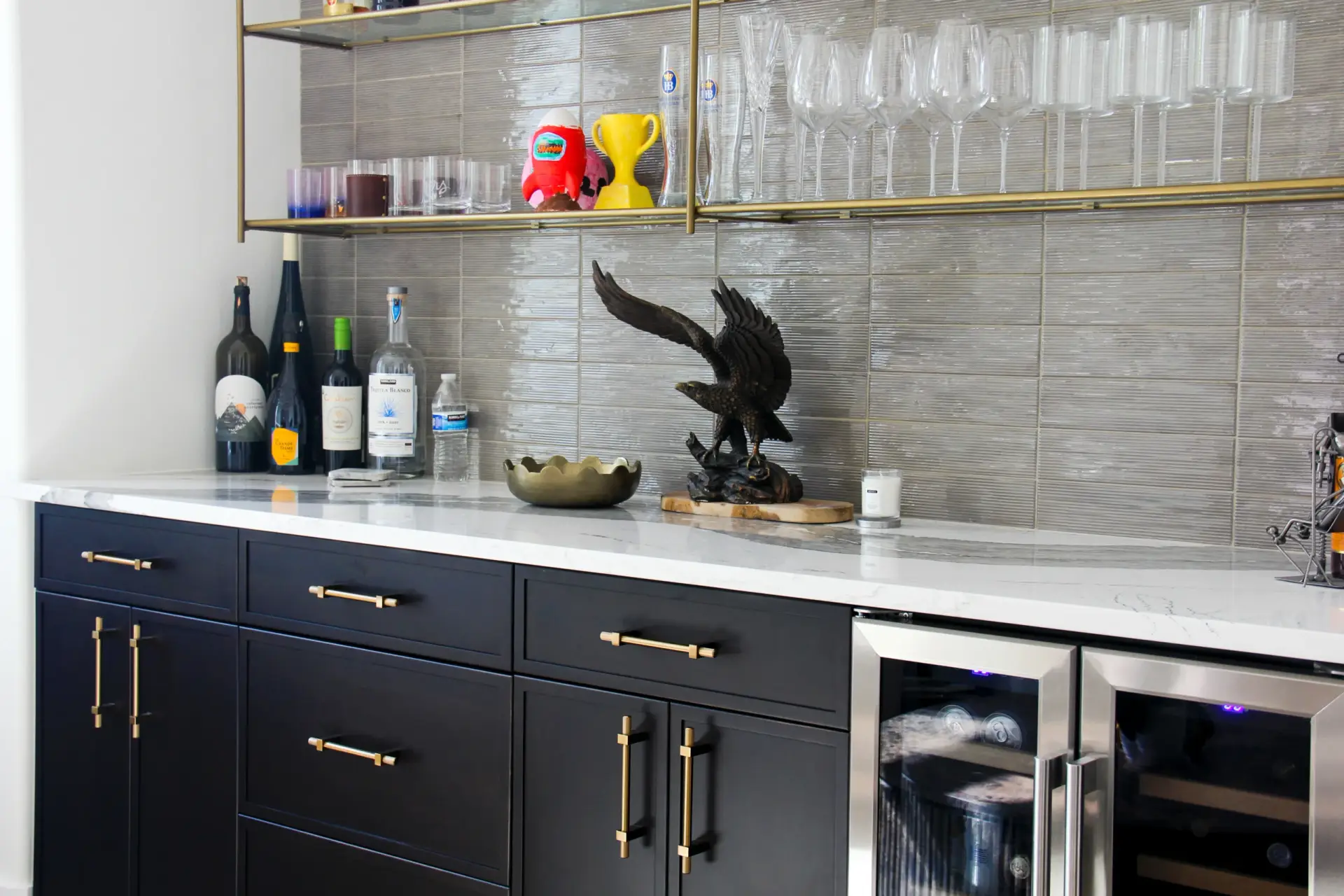
When mixing cabinet finishes, countertops and backsplash materials help tie everything together.
A neutral countertop works especially well because it complements both cabinet tones without competing for attention.
Likewise, a simple backsplash — such as light tile or subtle stone — keeps the focus on the cabinetry.
Too many bold materials can make the kitchen feel visually busy, so letting cabinets take center stage usually creates the best result.
Kitchen design trends and data
Mixing cabinet finishes isn’t just a passing trend, it reflects a larger shift in kitchen design.
According to the National Kitchen & Bath Association (NKBA) Kitchen Trends Report, designers increasingly recommend two-tone cabinetry and mixed finishes to create more personalized kitchens. These layered designs allow homeowners to introduce contrast while still maintaining a timeless overall look.
About Kirkplan Kitchens
Designing cabinetry that balances multiple finishes takes experience. That’s where Kirkplan Kitchen & Bath comes in.
We’ve been helping homeowners across Sarasota and Manatee design kitchens they love for over 25 years. That means helping you sort through cabinet styles and finishes, plan a layout that works for how you cook and live, and make sure everything: cabinets, countertops, hardware, surfaces comes together as one cohesive space rather than a collection of separate decisions.
You can explore our cabinet options here, or if you’re thinking about a full remodel, take a look at our kitchen services.
Simple tips before choosing cabinet finishes
A few things worth keeping in mind before you commit. Always look at samples in your own kitchen. Natural morning light and evening lighting tell very different stories, and what looks perfect in a showroom can surprise you at home. Try to stick to two main finishes so the space stays calm, and if you’re introducing an accent color, repeat it in small ways throughout the room so it feels deliberate rather than random. And think about maintenance honestly: darker cabinets are forgiving with everyday wear, while lighter finishes do a better job of bouncing light around in smaller kitchens.
Frequently asked questions about kitchen cabinet finishes
What is the most durable kitchen cabinet finish?
Satin and semi-gloss tend to hold up best in a working kitchen. They handle moisture, fingerprints, and daily use better than matte finishes, which can be harder to wipe clean over time.
Are wood cabinet finishes better than painted cabinets?
Neither is better, they’re just different. Wood finishes bring warmth and natural character, painted cabinets give you a cleaner, more uniform look. The right choice comes down to your kitchen’s style and how much upkeep you want to think about.
Can you mix cabinet finishes in one kitchen?
Absolutely, and it’s one of the better design moves you can make. The key is keeping one finish dominant and using the second as an accent: the island, a pantry wall, or lower cabinets are all great places to introduce contrast without making the space feel busy.
Bringing it all together
At the end of the day, mixing cabinet finishes is less about following a formula and more about understanding your space. Start with one finish that anchors the room, introduce contrast where it makes sense, and let your countertops and surfaces do the work of tying everything together.
When the balance is right, you stop noticing the individual decisions. You just walk into a kitchen that feels like it was designed, not assembled.